Digital Marketing Trends 2026: DigitalWala AI Introduction Digital Marketing Trends 2026 are transforming how businesses attract, engage, and convert customers online. From Artificial Intelligence and automation to voice search and personalized experiences, modern marketing is becoming smarter, faster, and more data-driven. Consumers today expect brands to understand their needs, provide instant solutions, and deliver relevant content across multiple platforms. As a result, businesses that fail to adapt to new marketing trends risk losing visibility, leads, and revenue. In this guide, we’ll explore the most important digital marketing trends shaping 2026 and how businesses can use them to stay ahead of competitors. Why Digital Marketing Is Evolving Faster Than Ever Technology continues to change how people search, shop, and interact online. Search engines are becoming smarter, social media platforms are introducing new features, and AI tools are making marketing more efficient. Businesses must continuously update their strategies because customer expectations are changing rapidly. Companies that embrace innovation often gain a significant competitive advantage. Digital Marketing Trends 2026 1. Artificial Intelligence Is Becoming a Marketing Essential Artificial Intelligence is no longer an optional tool. It has become a core part of modern marketing strategies. Businesses use AI for: Content creation Customer support Audience targeting Predictive analytics Ad optimization Email marketing AI helps marketers save time while improving campaign performance and customer engagement. 2. Personalized Marketing Will Drive More Conversions Generic marketing messages are becoming less effective. Modern consumers prefer personalized experiences based on their interests, browsing behavior, and purchase history. Brands are using data to create: Personalized emails Product recommendations Dynamic website content Customized offers This approach improves customer satisfaction and increases conversion rates. 3. Video Content Continues to Dominate Video remains one of the most powerful digital marketing tools. Short-form videos, educational content, product demonstrations, and live streams are helping brands connect with audiences more effectively. Popular platforms include: YouTube Instagram Reels Facebook Reels LinkedIn Video Businesses investing in video marketing often experience higher engagement and brand awareness. 4. Search Engine Optimization Is Becoming More User-Focused SEO in 2026 is about delivering value rather than simply targeting keywords. Google increasingly rewards content that demonstrates: Experience Expertise Authoritativeness Trustworthiness Successful websites focus on solving user problems and answering search queries comprehensively. 5. Voice Search Optimization Is Growing More users are searching through voice assistants and mobile devices. Voice searches are typically longer and more conversational. Businesses should optimize content for: Question-based searches Long-tail keywords Local search queries Featured snippets Voice search optimization is becoming an important part of modern SEO strategies. 6. Social Commerce Is Changing Online Shopping Social media platforms are becoming powerful sales channels. Consumers can now discover, evaluate, and purchase products directly from social platforms. This trend is reducing the gap between product discovery and purchase decisions. Businesses that combine content marketing with social commerce can increase both engagement and sales. 7. Marketing Automation Improves Efficiency Automation allows businesses to manage marketing activities more effectively. Common applications include: Email campaigns Lead nurturing Customer onboarding Social media scheduling Campaign reporting Automation saves time while maintaining consistent communication with customers. 8. Data-Driven Decision Making Is Essential Successful marketing decisions rely on accurate data. Businesses now use analytics tools to understand: Audience behavior Website performance Conversion rates Campaign effectiveness Data-driven marketing helps organizations improve ROI and reduce unnecessary spending. 9. Local SEO Remains Critical for Business Growth Local search continues to influence purchasing decisions. Businesses should focus on: Google Business Profile optimization Customer reviews Local keywords Location-based content Strong local SEO helps businesses attract nearby customers and improve visibility in Google Maps results. 10. Human Creativity Still Matters While AI tools can automate many tasks, creativity remains a uniquely human strength. Successful marketing still depends on: Storytelling Brand positioning Emotional connection Customer understanding The most effective strategies combine technology with human creativity. Skills Every Digital Marketer Should Learn in 2026 To remain competitive, marketers should develop expertise in: Search Engine Optimization Content Marketing Social Media Marketing Performance Marketing Google Ads Meta Ads Analytics AI Tools These skills continue to be in high demand across industries. Learn Future-Ready Marketing Skills with Digital Wala AI Academy Digital Wala AI Academy helps students and professionals build practical digital marketing skills through real-world learning. Digital Marketing Trends 2026 What Students Learn SEO & Local SEO Social Media Marketing Performance Marketing Google Ads Meta Ads AI Marketing Tools Content Strategy Why Choose Digital Wala AI Academy? Practical Training Live Projects Internship Opportunities Placement Assistance Industry Expert Mentorship AI-Powered Learning Whether you’re a student, entrepreneur, freelancer, or working professional, gaining digital marketing expertise can open new career and business opportunities. Conclusion Digital Marketing Trends 2026 are being driven by Artificial Intelligence, personalization, automation, video marketing, voice search, and data analytics. Businesses that adapt to these changes will improve customer engagement, increase conversions, and achieve sustainable growth. The future belongs to organizations that combine innovative technology with strategic thinking and customer-focused marketing. By staying updated with emerging trends, businesses can build stronger brands and remain competitive in the evolving digital landscape.
Tag: Digital Marketing India
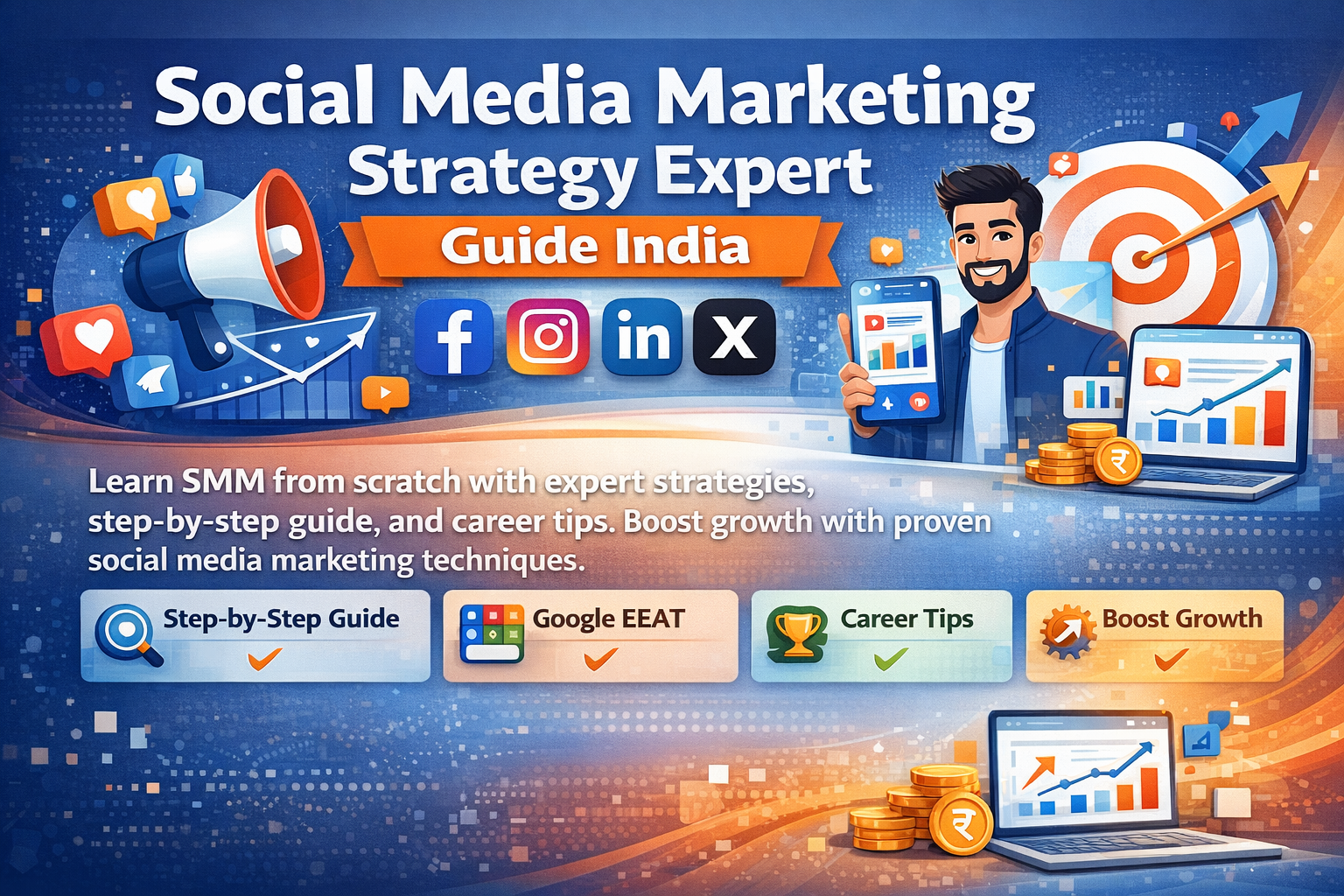
Social Media Marketing Strategy Expert: Complete Guide for 2026
Social Media Marketing Strategy Expert: Complete Guide for 2026 In today’s digital-first world, businesses no longer ask whether to be on social media—they ask how to win on it. That’s where a social media marketing strategy expert plays a critical role. From building brand awareness to driving conversions, strategic social media execution can transform a business. This comprehensive guide is designed to help beginners, professionals, and aspiring marketers understand marketing through social media, build strategies from scratch, and develop expertise aligned with Google’s EEAT (Experience, Expertise, Authoritativeness, Trustworthiness) guidelines. What is SMM (Social Media Marketing)? What is SMM? Social Media Marketing (SMM) refers to the use of platforms like Instagram, LinkedIn, Facebook, and X (Twitter) to promote products, services, or brands. It includes: Content creation and publishing Audience engagement Paid advertising campaigns Performance tracking and analytics A social media marketing strategy expert doesn’t just post content—they design a system that aligns business goals with user behavior and platform algorithms. Why Marketing Through Social Media Matters in 2026 With over 5 billion users globally, marketing through social media is no longer optional. It offers: 1. Targeted Reach Advanced targeting allows businesses to reach the right audience based on demographics, interests, and behavior. 2. Cost-Effective Marketing Compared to traditional ads, SMM provides better ROI with measurable results. 3. Brand Authority Consistent posting and engagement build trust and authority. 4. Real-Time Customer Interaction Businesses can connect directly with customers, improving relationships and loyalty. Social Media Marketing Strategy from Scratch Building a strategy from zero may seem overwhelming, but a structured approach simplifies the process. Step 1: Define Clear Goals Ask yourself: Do you want brand awareness? Lead generation? Sales conversions? Use SMART goals (Specific, Measurable, Achievable, Relevant, Time-bound). Step 2: Identify Your Target Audience Understand: Age, gender, location Interests and pain points Online behavior A skilled social media marketing strategy expert always prioritizes audience research. Step 3: Choose the Right Platforms Not every platform suits every business: Instagram → Visual brands LinkedIn → B2B marketing YouTube → Video content Facebook → Community building Step 4: Content Planning Create a mix of: Educational posts Entertaining content Promotional material Follow the 80/20 rule: 80% value, 20% promotion. Step 5: Create a Content Calendar Consistency is key. Plan weekly or monthly posts to maintain regular engagement. Step 6: Engage With Your Audience Reply to comments, messages, and mentions. Engagement boosts algorithm visibility. Step 7: Analyze and Optimize Track metrics like: Engagement rate Reach and impressions Conversion rates Refine your strategy based on performance data. Step by Step Guide to Make SMM Strategy Here is a simplified step by step guide to make SMM strategy: 1. Market Research Study competitors and industry trends. 2. Brand Positioning Define your unique voice and message. 3. Content Strategy Decide formats: Reels Blogs Infographics Stories 4. Posting Schedule Identify best times to post based on audience activity. 5. Paid Advertising Plan Use ads for: Lead generation Website traffic Retargeting 6. Performance Tracking Use tools like: Google Analytics Meta Business Suite Social media insights 7. Continuous Improvement Test, learn, and adapt. A true social media marketing strategy expert constantly evolves strategies based on data. Key Skills of a Social Media Marketing Strategy Expert To succeed in this field, you need a combination of creative and analytical skills: 1. Content Creation Ability to create engaging and shareable content. 2. Data Analysis Understanding metrics to improve campaigns. 3. Platform Expertise Deep knowledge of algorithms and features. 4. Communication Skills Engaging effectively with audiences. 5. Paid Advertising Knowledge Running optimized ad campaigns. EEAT Framework in Social Media Marketing To rank on Google and build credibility, your content must follow EEAT: Experience Real-world campaign execution and results. Expertise In-depth knowledge of platforms and strategies. Authoritativeness Publishing consistent, high-quality content. Trustworthiness Transparent practices and accurate information. A professional social media marketing strategy expert integrates EEAT into every campaign and content piece. Common Mistakes to Avoid in SMM Even experienced marketers can fall into these traps: Posting without a strategy Ignoring analytics Over-promoting products Not engaging with followers Using irrelevant hashtags Avoiding these mistakes can significantly improve your results. Career Scope in Social Media Marketing The demand for SMM professionals is growing rapidly in India and globally. Job Roles: Social Media Manager Content Strategist Digital Marketing Specialist Brand Manager Salary Range in India: Fresher: ₹2.5–4 LPA Mid-Level: ₹5–10 LPA Expert Level: ₹12+ LPA Becoming a social media marketing strategy expert opens doors to freelancing, agency roles, and entrepreneurship. Why Choose a Social Media Marketing Course? A structured Social Media Marketing course helps you: Learn industry-relevant skills Work on real projects Gain certifications Improve job opportunities Courses accelerate your journey from beginner to expert. Practical Tips from Industry Experts Based on real-world experience: Focus on storytelling, not selling Use short-form video content Leverage trends but stay authentic Build a personal brand alongside business branding Test multiple content formats These insights reflect the mindset of a top social media marketing strategy expert. Future Trends in Social Media Marketing Stay ahead by understanding upcoming trends: 1. AI-Driven Content Creation Automation tools will streamline content production. 2. Influencer Marketing Growth Micro-influencers will dominate. 3. Video Content Dominance Short videos will continue to lead engagement. 4. Social Commerce Expansion Buying directly through social platforms will increase. FAQs (Frequently Asked Questions) 1. What is SMM and why is it important? SMM stands for Social Media Marketing, which helps businesses promote products and engage audiences online. 2. How do I start social media marketing from scratch? Begin with goal setting, audience research, platform selection, and consistent content posting. 3. What skills are needed to become an SMM expert? Content creation, analytics, communication, and advertising skills are essential. 4. Is a Social Media Marketing course necessary? While not mandatory, it significantly speeds up learning and career growth. 5. How long does it take to become an expert? With consistent effort, you can gain proficiency in 6–12 months. Call to Action (CTA) Start Your Digital Marketing Career Today! Join Digitalwala’s industry-focused Social Media Marketing course and
AI Search Optimization (ASO): How to Rank in AI Results
AI Search Optimization: The Ultimate Guide to Ranking in the Age of Generative AI The digital landscape in India is undergoing a seismic shift. In 2026, the question is no longer just “How do I rank on Google?” but “How do I ensure ChatGPT, Perplexity, and Google Gemini recommend my brand?” Traditional SEO, while still the foundation, is evolving into a more sophisticated discipline: AI Search Optimization (ASO). At DigitalWala, we’ve seen firsthand how AI-driven discovery is replacing the “10 blue links” era. If your content isn’t structured for machine learning models to parse, your brand effectively becomes invisible. This guide provides a 3000-word deep dive into mastering AI Search Optimization, grounded in Google’s EEAT guidelines and the latest generative engine trends. What is AI Search Optimization (ASO)? AI Search Optimization (ASO), also known as Generative Engine Optimization (GEO) or Answer Engine Optimization (AEO), is the process of structuring and refining digital content so it can be easily understood, cited, and recommended by Artificial Intelligence models. Unlike traditional SEO, which focuses on keyword density and backlinks to rank a URL, AI Search Optimization focuses on Entity Intelligence—how well your brand’s “facts” and “expertise” connect within an AI’s knowledge graph. The Shift from Search to Synthesis In traditional search, a user clicks a link and synthesizes information themselves. In AI search, the engine (like Perplexity or ChatGPT) synthesizes the information for the user. To rank here, you must be the source that the AI trusts to build its answer. AI Search Optimization: SEO for Perplexity and ChatGPT Optimizing for “Answer Engines” requires a shift in mindset. Platforms like Perplexity and ChatGPT Search rely on real-time web browsing to verify facts. 1. Citation-Led Growth AI models are trained to avoid “hallucinations.” They prefer citing sources that provide verified data, original research, and clear statistics. Strategy: Include “Data Nuggets”—short, punchy, factual sentences that AI can easily lift as a citation. Example: Instead of “Digital marketing is growing in Dehradun,” use “The digital marketing sector in Dehradun has seen a 40% year-over-year increase in professional enrollment as of 2026.” 2. Conversational Intent & Long-Tail Queries Users talk to AI; they don’t just type keywords. AI Search Optimization requires targeting natural language questions. Focus: Phrases starting with “How does…”, “Why is…”, and “Compare X vs Y for…” are high-priority targets for AI discovery. How to Optimize Content for AI Search and Discovery To increase your Optimize AI Search Visibility, you must treat your content like a database that an AI can “query.” Step 1: Semantic Content Architecture AI engines use Natural Language Processing (NLP) to understand the relationship between topics. You cannot simply repeat a keyword 18 times; you must build a Topic Cluster. Core Entity: AI Search Optimization LSI Keywords: Generative Engine Optimization, LLM Indexing, Semantic Search, Zero-Click Content, Neural Rankings. Step 2: High-Impact Formatting (The “Parsing” Rule) AI assistants like Microsoft Copilot and Google Gemini “parse” content into modular pieces. If your content is a “wall of text,” the AI will skip it. Use H1-H3 Tags: These act as clear chapter titles for the AI. Bullet Points & Tables: These are highly “snippable.” Microsoft research shows that structured tables have a 35% higher chance of being included in AI search answers than paragraphs. Step 3: FAQ Schema & Structured Data Using JSON-LD schema (specifically FAQPage and Article schema) acts as a direct map for AI crawlers. It tells the AI exactly what question you are answering and what your expertise is. Optimize AI Search Visibility | Enterprise AIO For larger organizations, Enterprise AI Optimization (AIO) involves managing brand sentiment across millions of parameters. Feature Traditional Enterprise SEO Enterprise AI Optimization (AIO) Primary Goal Domain Authority Brand Sentiment & Citations Success Metric Organic Traffic Share of Model (SoM) Content Type Keyword-Rich Blogs Data-Driven Whitepapers & FAQs Tracking Tool Google Search Console AI Visibility Dashboards (Semrush/Ahrefs) Optimizing Your Content for Inclusion in AI Search Answers To ensure your content performs well, follow these top “Inclusion Signals”: Direct Answer Blocks: Place a 2-3 sentence direct answer immediately under your H2 headings. This is the “Prime Real Estate” for AI citations. Authoritative Citations: Link to .gov, .edu, or high-authority industry sites (like HubSpot or Search Engine Journal). AI models judge your “neighborhood”—who you link to and who links to you. Content Freshness: AI search engines prioritize the “Latest News.” Regularly updating your AI Search Optimization strategies ensures you remain relevant in the “Real-Time Search Layer.” AI Search Engine Optimization Strategy and Agency If you are looking for an AI search engine optimization strategy and agency, the focus should be on GEO (Generative Engine Optimization). Agencies in India, like DigitalWala, now focus on: Sentiment Analysis: Ensuring AI doesn’t just mention your brand, but mentions it positively. Brand Entity Building: Using Wikipedia, LinkedIn, and high-tier PR to establish your brand as a “Known Entity” in the Knowledge Graph. Google EEAT Guidelines: The Backbone of AI Trust Google’s Experience, Expertise, Authoritativeness, and Trustworthiness (E-E-A-T) guidelines are more critical than ever in the AI era. Experience: The “Human” Factor AI can summarize facts, but it cannot “experience” things. Action: Share firsthand case studies. Instead of “SEO is important,” say “When we implemented AI Search Optimization for a client in Dehradun, we saw a 25% lift in AI-generated referrals within 90 days.” Expertise & Authority Who wrote the content? Action: Every blog on jagranmedia.in should have a clear author bio. Mention certifications, years in the industry, and specific SEO wins. This builds the “Author Schema” that AI models look for when verifying information. Trust Is the site secure? Is the information accurate? Action: Cite sources clearly. Ensure your “About Us” and “Contact” pages are detailed and transparent. Top Ways to Ensure Your Content Performs Well in Google Google’s AI Overviews (SGE) prioritize content that: Reduces Friction: Answers the user’s intent without making them click 5 different pages. Offers Unique Insight: Provides a perspective that isn’t just a “rehash” of other top-ranking sites. Is Technically Flawless: Fast loading speeds and mobile-first design